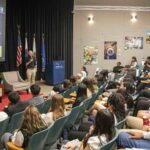
In late July, 37 high school students participating in Berkeley Lab’s Academic Learning Internships and Faculty Training (A-LIFT) program gathered to celebrate the culmination of their summer research experiences. A-LIFT, formed in FY2026 through the merger of the Lab’s Workforce Development and Education (WD&E) and K-12 STEM Education programs, oversees the Lab’s student and educator […]
News
ONHS Launches Website and Internal Site with Funding Opportunities Resources
The Lab’s Office of National and Homeland Security (ONHS) acts as the interface between the Lab and the nation’s security agencies, including the Department of Defense (DoD), Department of Homeland Security (DHS), the DOE’s National Nuclear Security Administration (NNSA), and the intelligence community. ONHS recently launched external- and internal-facing websites to provide information and resources […]
Career Pathways Office Launches Program for Mid-Career Scientists and Engineers at the Lab

As researchers at Berkeley Lab progress through their careers, new skills are required. Early career researchers can take part in a number of programs offered by the Career Pathways Office. Now, the Career Pathways is launching new career development support for mid-career scientists and engineers. Following discussions with leadership, in FY25, the Career Pathways Director […]
A-LIFT Helps Build a Quantum Computing Workforce

Quantum technologies, which have the potential to revolutionize science, are an area of growth, with the DOE investing more than $1.6 billion in quantum information sciences and technology since 2019. The need for a skilled workforce in the field continues to grow, yet with the numbers of trained scientists and engineers lagging behind demand, the […]
Representations and Certifications Form Requirement for Some Research Partners
Berkeley Lab uses the Representations and Certifications form to accurately capture the profiles of organizations interested in or already pursuing research projects with the Lab. The information on the form is crucial for determining foreign affiliation and fulfilling DOE contractual requirements. Who must complete the form? Not every research partner is required to complete the […]
Looking Forward to the Upgraded ALS
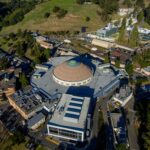
New and Improved Capabilities will Benefit Users and Berkeley Lab Scientists As most researchers at Berkeley Lab know, the Lab is in the midst of a historic modernization of the Advanced Light Source — also referred to as the “ALS Upgrade” or “ALS-U” project. The project will replace the current ALS ring with two rings, […]
3Q4: José Luis Rudeiros Fernández
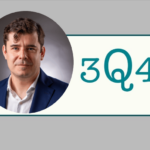
José Luis Rudeiros Fernández is a research scientist in the Physical Sciences Area’s Accelerator Technology & Applied Physics (ATAP) Division. Born in Spain, José Luis worked at the European Organization for Nuclear Research, known as CERN, in Geneva for five years before joining Berkeley Lab in 2020. At the Lab, he designs and builds superconducting […]
LDRD Program Announces FY26 Projects
Our Laboratory Directed Research and Development (LDRD) program serves as a proving ground for innovative concepts, providing seed funding for selected high-risk, high-reward research ideas. It attracts promising young scientists and engineers and encourages them to pursue new approaches to problems. For the FY26 cycle, the LDRD Call for Proposals cycle received a total response of […]
Sparking Innovation at Berkeley Lab: An LDRD Award Recipient’s Story

It is Laboratory Directed Research and Development (LDRD) Program proposal season once again. The FY2027 call for proposals was issued on November 19. This year, the deadline for multi-area proposals will be March 13, while Area Priority and Early Career Development proposals are due on April 17. The LDRD Program is one of Berkeley Lab’s […]
Early Career Scientist Director’s Award Recipients Share Tips for Success

With the recent Director’s Awards celebration, Research News took the opportunity to chat with some Director’s Award early-career scientist recipients about their careers and what they have learned about how to be successful researchers. We spoke with scientists Timon Heim (Physical Sciences Area), Kate Zhalnina (Biosciences Area), and Marco Pritoni (Energy Technologies Area). Timon Heim […]
Was this page useful?
Send

