With the recent Director’s Awards celebration, Research News took the opportunity to chat with some Director’s Award early-career scientist recipients about their careers and what they have learned about how to be successful researchers. We spoke with scientists Timon Heim (Physical Sciences Area), Kate Zhalnina (Biosciences Area), and Marco Pritoni (Energy Technologies Area).
Timon Heim
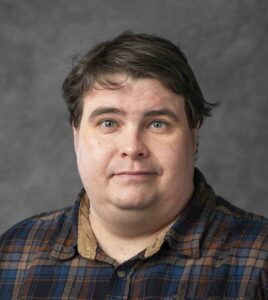
Timon Heim found his career path early on, when he was offered a student job with the ATLAS project (one of the largest collaborative efforts to understand the universe) at the University of Wuppertal in Germany. He very much enjoyed the problem-solving focus and working with cutting-edge innovations that came with operating the ATLAS experiment at the Large Hadron Collider (LHC) at CERN, and stayed with the project even as he moved to other institutions. This experience led to a postdoc and then a staff scientist role at Berkeley Lab.
“On a large project like ATLAS, there’s so much to do, from high-performance software development to hard physics problems to engineering challenges. I particularly enjoy the interface between physics and engineering,” said Timon.
Timon notes that working in an international collaboration can be both a blessing and a curse. He appreciates that there is always a lot of work to do, and thus many opportunities to contribute. However, he notes that success with a large project is not just about finding the best solution; sometimes, it is also about making compromises.
Being flexible is a skill that Timon has honed over the years. For example, he works on a data acquisition system that is used by more than 20 institutions around the world. He interacts with many expert users, many of whom have a strong opinion. “Finding the middle ground is sometimes hard, but necessary,” said Timon.
To help raise his visibility within a large project, Timon has found it helpful to build expertise in a particular area. “In some research areas, publishing papers is important, but it’s not as critical in my area.” Timon has worked on a particular readout chip that’s a centerpiece of the ATLAS Pixel detector. He contributed to design, testing, and characterization, and over the years became an expert on this chip, which is now widely being used within the ATLAS collaboration.
Kateryna Zhalnina
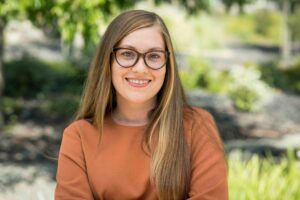
Kateryna “Kate” Zhalnina was always interested in microbiology. While in graduate school in Ukraine, she worked on the development of microbes that were beneficial to humans. She was also interested in the role of soil microbes in helping plants take up nutrients, fight pathogens, and improve soil fertility.
Kate’s passion for harnessing microbes as nature-based solutions to human and agricultural challenges inspired her to apply for a Fulbright scholarship. Receiving the scholarship led her to the University of Florida in 2009, at a time when sequencing technology was developing rapidly. Kate seized the opportunity to learn bioinformatics skills, which helped her explore novel functions of soil microbes. “With sequencing technology, I was less dependent on growing microbes in the lab,” she said.
Kate continued learning new skills when she joined Berkeley Lab in 2014, after completing her Ph.D. in Florida. As a postdoc, she learned about metabolomics, which helped her study signals that plants send to microbes and vice versa. “You have to keep learning throughout your career,” shared Kate.
For Kate, publishing papers has been an important part of her success. In addition to co-authoring papers with others, she was the lead author on a paper in 2018 about how plants impact the composition of the soil microbiome by sending out signals. The paper was highly regarded within the scientific community and played a key role in launching her career. “Publishing work that captured the attention of the scientific community really helped shape my career,” stated Kate. “It led to invitations to speak at conferences and greater success in winning research grants.”
Kate notes that having great mentors has been key to her success. At Berkeley Lab, she was fortunate to be mentored by leading scientists – including Eoin Brodie, Trent Northen, and Susannah Tringe – to name a few. “You have to find good mentors who can give you advice and support,” she said.
Kate also encourages early and frequent networking — both within and beyond the Lab, including with industry partners. “Networking gives you access to good advice, insights into others’ research, and a broader range of skills,” she opined.
Finally, Kate attested to the importance of resilience in research. “Setbacks are inevitable — especially in biology, where plants can die, and experiments must begin again,” she reflected. “But every challenge teaches you something new. Persistence is what turns those lessons into discoveries.”
Marco Pritoni
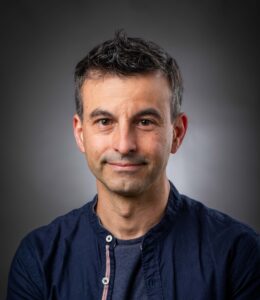
Marco had a somewhat unusual career path to scientific research. He started in industry as a production and manufacturing manager in Italy. When he moved to the U.S. during an economic downturn to join his partner, he found himself unemployed and uncertain about his future. He started taking extension courses at UC Davis in energy efficiency and volunteering with an energy efficiency institute. His UC Davis professor, Alan Meier (who is also a scientist at Berkeley Lab), encouraged Marco to pursue a Ph.D. Marco did so, and got involved in all the relevant projects that came his way – projects which turned out to be helpful for his future career. Marco joined Berkeley Lab in 2010 as a senior research associate, and became a scientist in 2016 with appointments at UC Berkeley and UC Davis. Today Marco is a staff scientist and he leads a team of researchers working on optimizing building operation and building-to-grid interaction.
Marco has a habit of saying yes. He tries to work with everyone. The network he began to develop at UC Davis turned out to be very helpful as he worked to connect PIs and create a multidisciplinary team to tackle complex problems. “My projects while at UC Davis were actually not very helpful for my Ph.D., but they have been invaluable in my work at Berkeley Lab, providing me with connections to academic researchers as well as industry partners,” said Marco.
In fact, Marco credits his ever-expanding network with many of his successes. One of the papers he recently co-authored, “Towards Zero-shot Question Answering in CPS-IoT: Large Language Models and Knowledge Graphs,” was recently recognized with the “Best Paper Award” at the 2nd International Workshop on Foundation Models for Cyber-Physical Systems & Internet of Things. The lead author for the paper is Ozan Mulayim, a graduate student from Carnegie Mellon whose advisor has been collaborating with Marco for several years. The paper addressed a challenge for which Marco had been looking to solve, and when the large language models came online, they turned out to be a great tool for exploring the problem.
Marco also encourages early-career researchers to be entrepreneurial. Speaking of his own experience, he said, “When I was just starting out at the Lab, I worked to grow my portfolio. As the work grew, I was able to hire additional researchers.”
Marco notes that finding ways to be exposed to more experiences and communities can be valuable in building a research career. “Ask your supervisor for opportunities to be exposed to funding agencies, and to present at conferences and industry events. At the Lab, explore ways to collaborate with other researchers. Volunteer for cross-Area activities,” he said. “You never know what opportunities might emerge.”
***

