It is Laboratory Directed Research and Development (LDRD) Program proposal season once again. The FY2027 call for proposals was issued on November 19. This year, the deadline for multi-area proposals will be March 13, while Area Priority and Early Career Development proposals are due on April 17.
The LDRD Program is one of Berkeley Lab’s principal means to seed innovative science and new research directions. Its purpose is to encourage innovation, creativity, originality, and quality to keep the Laboratory’s research activities and staff at the forefront of science and technology, while supporting competencies aligned with the Laboratory and DOE’s strategies.
Research News spoke with an FY 2025 LDRD award recipient, John Hartwig, a chemist from the Energy Sciences Area, about his experience submitting for the LDRD award. His research project with co-PI Talita Perciano, a data and computational scientist from the Computing Sciences Area, “Predicting catalyst reactivity and selectivity with structure-based deep learning,” recently concluded.
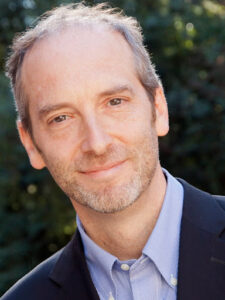
John and Talita’s LDRD project goal was to apply machine learning (ML) to predict experimental outcomes of catalytic reactions and to design new catalysts. “Molecular catalysts are discrete molecules with no repeating structures, so the ability to connect their 3D structures to activity is very important. We needed to find ways to digitally represent 3D catalysts in order to better predict catalyst activity and to design new catalysts,” he explained.
The idea first emerged five years ago, when Masha Elkin, a postdoctoral researcher in John’s lab who had worked with ML during her Ph.D., developed early approaches for predicting catalyst activity. After Masha left to begin an assistant professorship at MIT, a graduate student, Nick Hadler, expanded on her work. Drawing largely on ML skills he taught himself during the COVID lockdown, Nick created a new approach that showed strong promise for predicting the reactivity of catalysts across several reactions. Shortly thereafter, Ian Rinehart, a postdoc with extensive ML expertise, joined the lab and began applying this strategy to predict catalyst activity to design new catalysts for the industrially important hydroformylation reaction.

John said, “I am certainly no machine learning expert, so I greatly appreciate the talent, the initiative, and the contributions from Nick and Ian in my lab. Without their input, we wouldn’t have been able to make the progress that we did,” he continued.
Collaborate with Experts
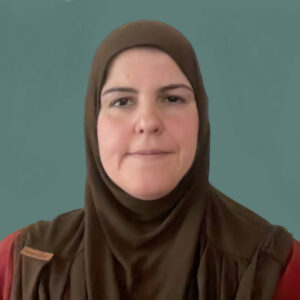
John notes that his lab’s researchers had made substantial progress on their own in developing methods tailored to 3D catalysts, but the team recognized that advancing further would require expertise in computational imaging and machine learning. About five years ago, a scientific matchmaking program introduced John to Talita Perciano, a research scientist in the Computing Sciences Area’s Scientific Data Division with deep experience in machine learning, image processing, and data analysis. Talita had developed methods that used existing ML models for image processing and analysis, and the challenge of building 3D catalyst representations proved to be an ideal match for testing these methods.
If at First You Don’t Succeed…
John noted that he, Talita, and the team submitted three LDRD proposals before the project was finally selected, and the process taught him how essential it is to present a proposal effectively. For the first submission in FY 2022, reviewers remarked that the topic was exciting, but the need for this approach for their type of catalysts was not clearly articulated. Why was it unique? Why was it important? In response, he and Talita refined the second, and then the third, proposal to more directly highlight the central challenge: the need to represent discrete catalysts in three dimensions and the absence of any existing tools capable of doing so. Their proposed research sought to build on technology that worked in 2D and extend it to tackle the far more complex task of generating and analyzing 3D catalyst representations.
“The proposal evaluators have broad expertise, so we needed to present the problem in a way that can be understood by, and that is attractive to, someone who doesn’t necessarily have deep expertise in our particular area of research,” said John.
John offered to potential LDRD proposal submitters, “If you are not successful with your proposal the first time, don’t give up. Learn from your earlier proposals to improve future submissions.”
Next Steps for 3D Representations of Catalysis
With the two-year LDRD project now at its end, the team has demonstrated that their new 3D approach can reliably predict the selectivities of a wide range of hydroformylation catalysts, including several selectivities that would be surprising even to experts. They have also started drawing on large datasets generated at Berkeley Lab and by industrial partners to pretrain the models before turning to specific catalytic problems. In other words, they will use models that have been created from solved chemistry problems to address future unsolved problems with small sets of data.
The results are now the subject of a paper that John, Talita, colleagues, and collaborators recently submitted for publication. The approach has broad potential applicability, and the team expects it to shape several future efforts. It will form a research direction within the Berkeley Lab catalysis program and support collaborations with industrial partners, all aimed at accelerating the discovery and development of catalysts that are valuable for synthetic chemistry carried out at both large and small scales.
“I am very grateful for the support the LDRD program provided. The project needed seed funding to prove its potential value, and LDRD allowed us to take that first step,” said John.
Visit the LDRD website for more information about the LDRD call for proposals.

