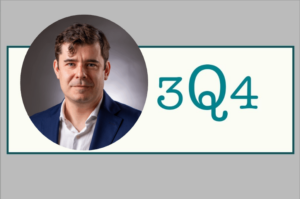
José Luis Rudeiros Fernández is a research scientist in the Physical Sciences Area’s Accelerator Technology & Applied Physics (ATAP) Division. Born in Spain, José Luis worked at the European Organization for Nuclear Research, known as CERN, in Geneva for five years before joining Berkeley Lab in 2020. At the Lab, he designs and builds superconducting magnets for applications in particle accelerators, fusion energy, and medicine.
One of the early career scientist awardees of the Director’s Award in 2025, José Luis was recognized for his innovations in superconducting magnets, including the “Uni-layer” concept, a paradigm-shifting design that enables highly efficient magnets using strain-sensitive superconductors in a simple and affordable form. His improvements in fabrication processes, which eliminate training quenches (a loss of superconductivity as the magnet “learns” to handle higher currents) through new compounds and techniques, were also acknowledged. Additionally, he demonstrated leadership in developing the Test Facility Dipole, a magnet central to Berkeley Lab’s contribution to a Fermilab high-temperature superconductor (HTS) facility being developed jointly by the DOE’s Office of Fusion Energy Sciences (FES) and the Office of High Energy Physics (HEP).
What fueled your interest in particle accelerators and superconducting magnets?
As a scientist, I was fascinated by the scale and complexity of particle accelerators and how they allow us to explore the fundamental structure of reality. Superconducting magnets are essential to these machines —along with fusion energy and medical applications— integrating superconductivity, cryogenics, and mechanical and electrical engineering in a way that pushes technology to its limits. This combination makes superconducting magnet R&D both extremely challenging and very exciting.
Tell me about your “Uni-layer” design for a superconducting magnet.
Advanced superconducting magnets are crucial components of modern science, especially in particle accelerators, where progress depends on generating increasingly stronger magnetic fields. These magnets play a critical role in accelerators as they shape and steer the particle beams and determine the accelerator’s energy reach. They must deliver exceptionally high field quality and operate with absolute reliability. As high-energy physics colliders grow larger, cost-effectiveness becomes essential. Looking beyond the Large Hadron Collider toward future facilities with even higher energies and larger sizes, superconducting magnets must simultaneously meet criteria of performance, reliability, and affordability.
The “Uni-layer” magnet concept introduces a new way to wind superconducting cables into a magnet that combines the best features of existing designs. Its unique and innovative design could significantly improve manufacturability and efficiency by leveraging strain-sensitive high field superconductors, especially for particle accelerators. This design marks great progress toward one of the most important challenges: making future colliders affordable. The “Uni-layer” design enables higher magnetic fields with less expensive superconducting material. At the Lab, we are advancing from the initial idea to tangible objects. Having built a small prototype, we are now moving to larger scales.
What career tip would you offer other scientists at the Lab?
I noticed that when we are very busy, we’re almost on autopilot: we complete reports, write papers, and attend meetings. We don’t have enough time to just think. I’ve found it helpful to schedule time for deep thinking about issues and challenges. It might not seem productive, but having “think time” has helped me generate new ideas. I now do this regularly— blocking time out at least once a week.
Any other tips?
It’s also important to talk with people. You always learn something by talking with other scientists, engineers, and technicians; everyone has a piece of information they can share that you may not have. Don’t be afraid to admit you don’t know something. Often, asking the question and having the conversation are key to getting a deeper understanding that neither of you has.
For example, the “Uni-layer” idea arose because my supervisor, who also previously worked at CERN, and I both had experience with a different type of superconducting magnet. We had many discussions about potential designs for superconducting magnets that would combine the advantages of different approaches.
Ultimately, it’s important to stay curious, to always ask questions, and to keep thinking, “Maybe there is a better way.”

