Message from Jeff

Dear Colleagues,
I am excited to have recently stepped in as Interim Deputy Laboratory Director for Research and Chief Research Officer, and I look forward to supporting our research teams in their important work during this dynamic time while also preparing for the many opportunities in front of us.
Earlier this month, the UC Regents announced the selection of incoming Lab Director Kathy Yelick, who will begin her tenure on July 1, ahead of Mike Witherell’s retirement in the fall. I encourage you to view Mike’s and Kathy’s conversation about the Lab’s future. I am thrilled to work closely with Kathy on shaping the future of the Lab and how we can continue to advance our scientific mission and contribute to society in meaningful ways. At the same time, Mike’s retirement is bittersweet; it has been a privilege to work with him, and he’s done so much for the Lab and its culture. His leadership has been inspiring. I encourage you to read his recent Q&A about the state of the Lab to learn more about our current directions and challenges.
This spring is an especially busy and productive time. Genesis Mission proposals have all been submitted — an astounding 75 lead proposals and over 400 partner proposals, a record number for the Lab for any single funding call. From the response and quality of our proposals, it is clear the Lab is well positioned to demonstrate how AI can advance Genesis Mission National Science and Technology Challenges. Many congratulations to the teams that saw these proposals through. We will hear the outcome in the next month or two, and I look forward to starting several projects with our partners later in the year.
Beyond the Genesis Mission, we continue to play a key role across the national labs in leading and supporting the development and use of AI for research as well as many other DOE priorities, including quantum computing, microelectronics, critical minerals and materials, energy, and biomanufacturing. Thank you all for your continued commitment to our research mission.
I’m excited to step into this role and help shepherd the Lab’s scientific strategy and resources, and its inspiring people. For those of you who are curious about my background and perspective, please take a listen to my recent conversation (included in this newsletter) with our Chief Communications Officer John German. I look forward to meeting and working with you, and please don’t hesitate to reach out with questions or suggestions.
With appreciation,
Jeff Neaton
Interim Deputy Laboratory Director for Research
Chief Research Officer
Kathy Yelick and Jeff Neaton Podcast Interviews

The UC Board of Regents announced on May 5 that Katherine (Kathy) Yelick will succeed Mike Witherell as Berkeley Lab’s next director, following a national search. In addition, in late March, Jeff Neaton was named the Lab’s Interim Deputy Director for Research and Chief Research Officer.
View the podcasts below to get to know Kathy and Jeff better.
Hear from incoming Lab Director Kathy Yelick, interviewed by outgoing Lab Director Mike Witherell. (19:12)
AI for Science Follow-Up: Kjiersten Fagnan Answers Your Data Management Questions
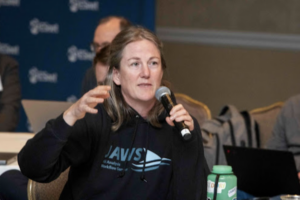
Kjiersten Fagnan from the Joint Genome Institute (JGI) kicked off a new AI for Science collaboration series on March 10, sharing her insights on organizing large datasets to make them AI-ready. Research News sat down with Kjiersten to dive deeper into data management, the Genesis Mission, and how AI might be able to help us with ontology development — in other words, how to categorize, define, and structure our data.
Read the story (LDAP required).
Career Pathways Office Launches Program for Mid-Career Scientists and Engineers at the Lab

As a researcher at Berkeley Lab progresses through their career, new skills are required. Early career researchers can take part in a number of programs offered by the Career Pathways Office. Now, the Career Pathways is launching new career development support for mid-career scientists and engineers.
Q&A with Jesse Kindra: Tech Transfer at Berkeley Lab
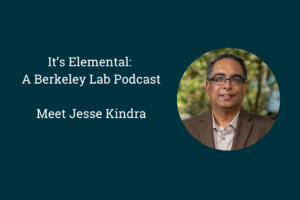
Why is tech transfer important to the Lab’s mission? It is a strategic mechanism to engage the private sector in transforming scientific breakthroughs into real-world applications and products, often bridging the “valley of death” and ensuring that technologies with high potential are adopted. Tech transfer is also an important priority, and in fact a requirement, for the DOE. By partnering with industry, national labs can contribute to the nation’s economic growth and strengthen our leadership in science and technology.
Hear what the Lab’s Chief Technology Transfer Officer Jesse Kindra has to say about how the Lab translates the amazing work done by researchers and engineers into products or services that can benefit society.
A-LIFT Helps Build a Quantum Computing Workforce
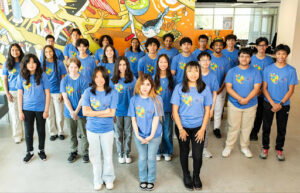
The need for a skilled workforce in the quantum field continues to grow, yet with the numbers of trained scientists and engineers lagging behind demand, the number of unfulfilled job vacancies increases every year. Berkeley Lab’s Academic Learning Internships and Faculty Training (A-LIFT) Office recognized this growing gap about five years ago and partnered with Sandia National Laboratories to develop and implement a workforce plan.
NEED TO KNOW
DOE Review Process for SPP/CRADA Work Sponsored by Foreign Entities

DOE requires headquarters review and approval of all SPP/CRADA work sponsored by foreign owned, controlled, or influenced institutions. To facilitate their review, the Lab is required to provide a Foreign Analysis Worksheet (FAW) that explains the risks and benefits of the proposed work.
The FAW now requires a more comprehensive technical assessment from the PI. Detailed step-by-step instructions can be found in the guidance document below:
Feb 2026 eSRA Guide for Foreign Analysis Worksheet
These updates were recently presented at the February 2026 Finance Network meeting to help administrative staff support PIs through this more rigorous review process. The FAW must be completed and submitted as part of the eSRA proposal package to SPO.
Questions? Contact SPO@lbl.gov.
Representations and Certifications Form Requirement for Some Research Partners
Are you working with a research partner outside Berkeley Lab? If so, the research partner may be required by the DOE to complete the Representations and Certifications form, which the Strategic Partnerships Office will send to the research partner at the start of the project and every two years afterwards. The DOE, other DOE national labs, the U.S. federal government, and state and local government partners are exempt from this requirement.
Researcher Reference Guide: Protecting Your Name and Your Research in Publications
Maintaining the trust of stakeholders requires transparency about all collaborators on a research project, particularly when partnerships involve institutions or individuals subject to research security or export control considerations. A quick reference guide developed by the Research Compliance Office’s Export Control team helps to ensure that risks can be avoided or mitigated when working with sensitive collaborators, institutions, or countries.
GOOD TO KNOW
Upcoming AI for Science Event, June 4
As a Genesis Mission ModCon model seed project, the Multi-Office particle Accelerator Team (MOAT) is developing AI tools to improve particle accelerators and speed breakthroughs. Join MOAT lead Jean-Luc Vay and colleagues for a discussion on intra- and inter-organizational collaboration, including leveraging existing resources from AmSC and ModCon.
The hybrid event will be held in person in the 3rd floor conference room of B91, and virtually over Zoom.

